


About CipherCru
The technology partner between business ambition and what it takes to make it real.
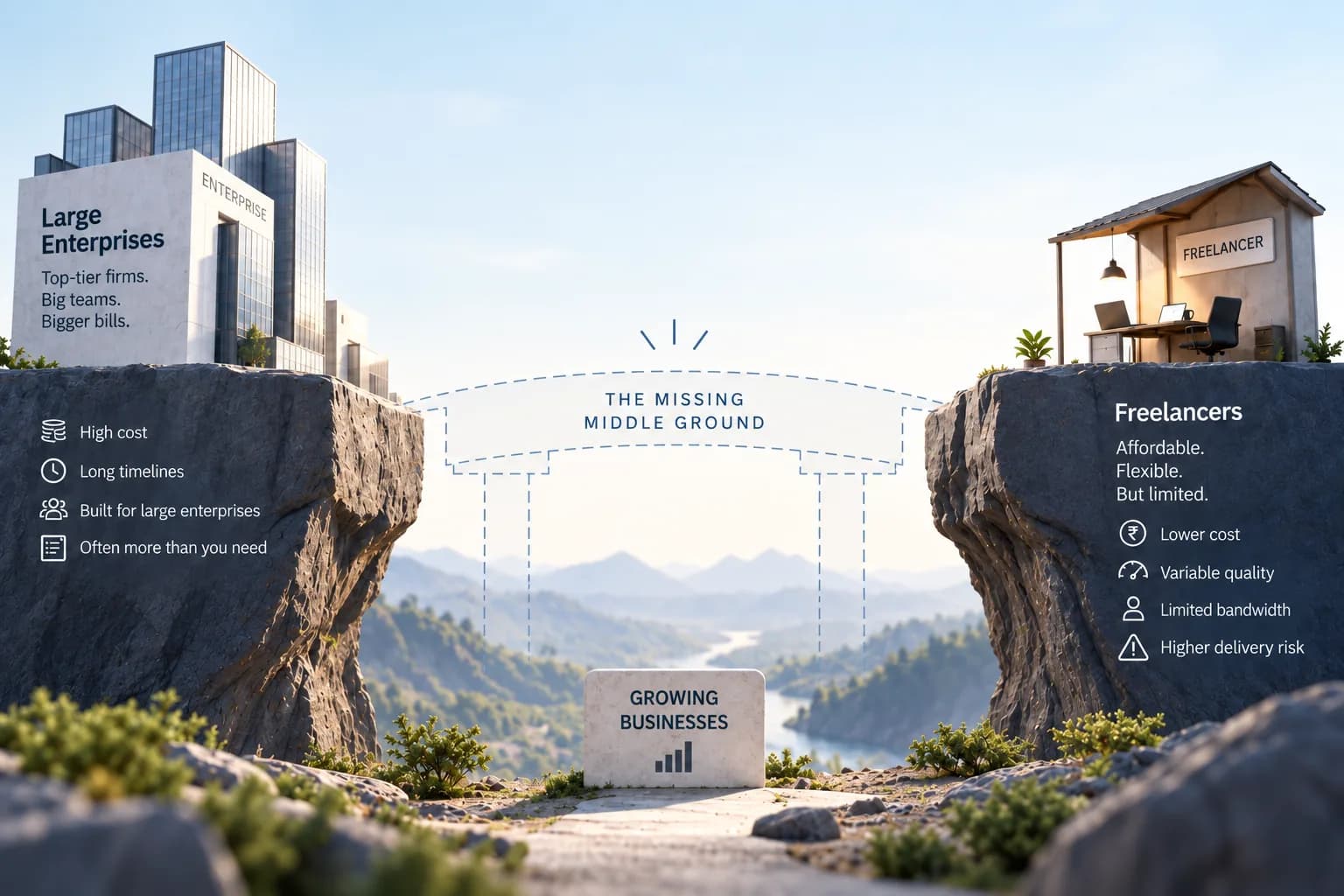
CipherCru bridges the gap between freelancers and large technology firms—giving SMEs and growing businesses access to senior engineering judgment and consulting expertise without unnecessary cost, complexity, or dependency.We don't simply build what we're asked to build. We understand the business, challenge assumptions where necessary, and take responsibility for engineering the right solution.
Technology should strengthen the business—not become another thing the business has to work around.
The best technical solution is the one that creates the right business outcome.
That means diagnosing before building, reusing what already works before replacing it, and making technology decisions that improve the client's position rather than increasing their dependence on the vendor.
For us, technology is not the destination. It is the infrastructure that helps the business move forward.
The middle ground that did not exist.
Growing businesses had two ways to buy technology help. Neither of them fitted.
At one end were freelancers and small teams: quick to start and affordable, but without the depth to own an architecture, carry a delivery through its difficult middle, or stay accountable once the problem turned out to be bigger than the ticket. At the other end were large consultancies and technology firms, which could do all of that, and which were priced, staffed and processed for enterprises rather than for a company of thirty people. Between the two there was nothing.
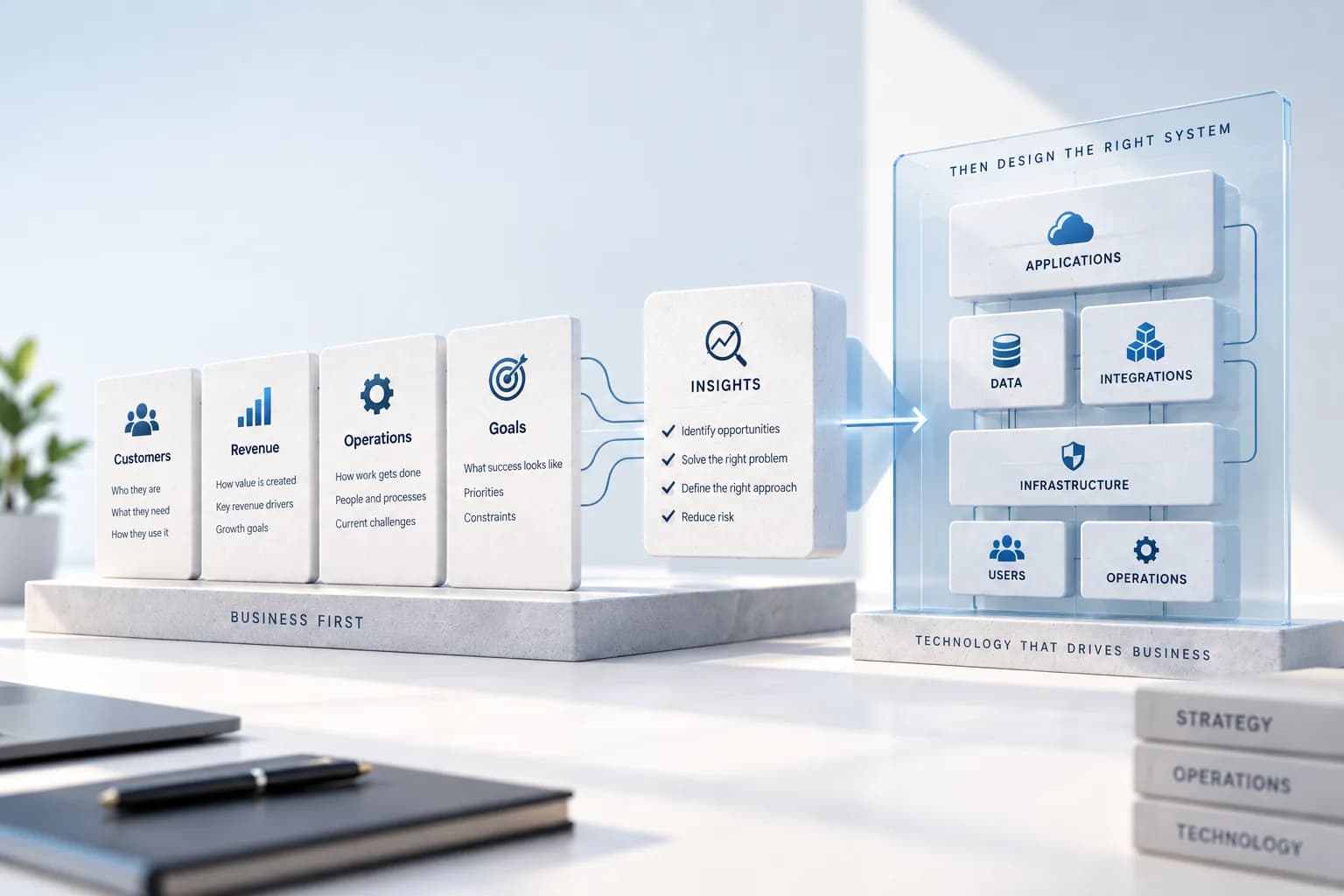
CipherCru was founded in 2021 to be that missing middle. The starting position was a business one rather than a technical one: understand what the company is trying to achieve, what is already working, and what the change is actually for—then decide what should be built.
It began with one engineer. It is now a team of more than fifty, and it grew the way the work did: by being asked back, and then asked for more.
That growth came in three directions at once. Into new industries—health insurance, cybersecurity, financial services, applied AI and enterprise software. Into new capabilities, from product engineering and modernization through to data, cloud and AI. And into new regions, with clients and delivery now spanning six countries.
The name says what the company is. A cipher is what makes something unreadable legible; a crew is a small group that works together and is accountable to one another. That is the job: decode the problem, then stay responsible for what gets built on the answer.
Change the technology without putting today's business at risk.
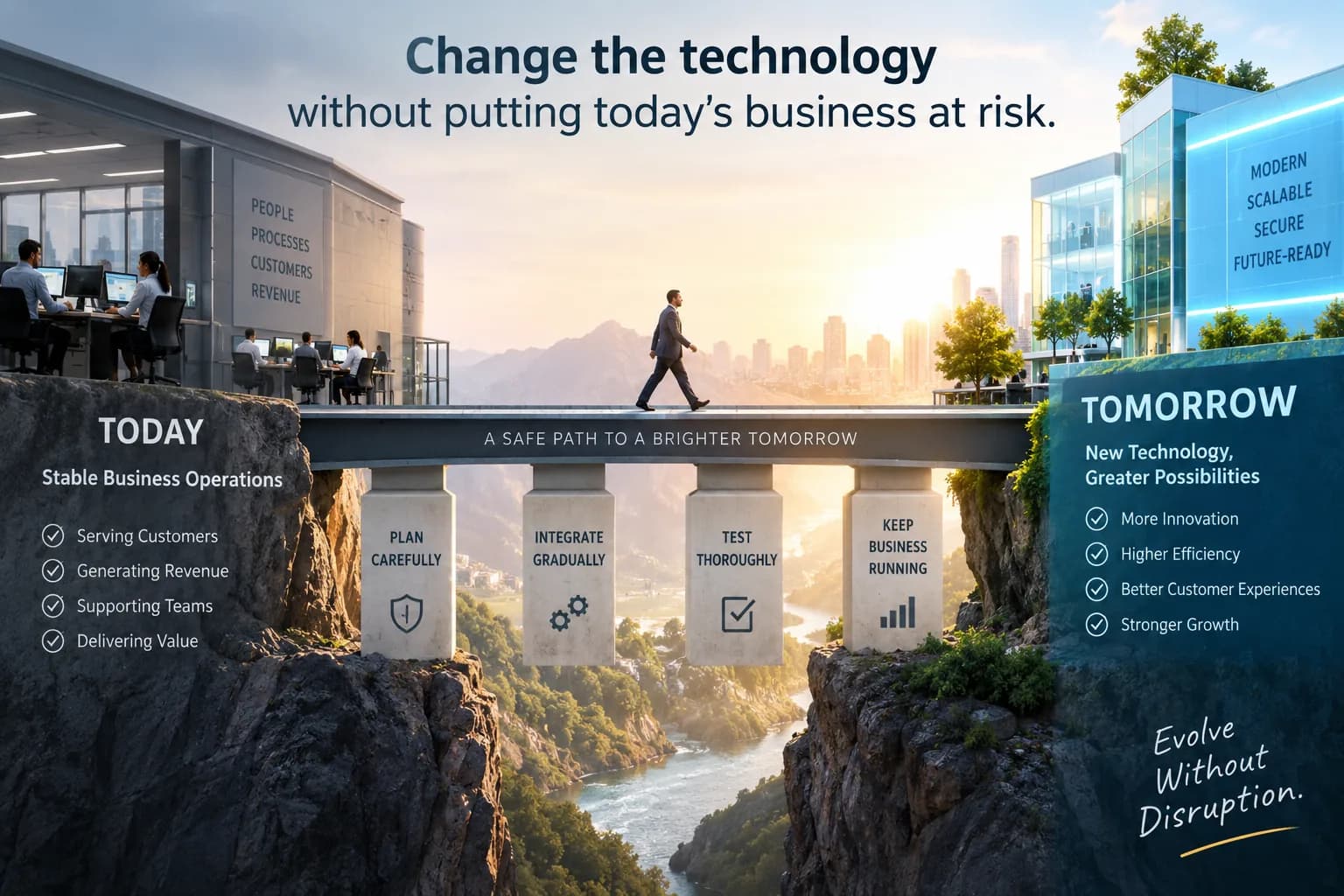
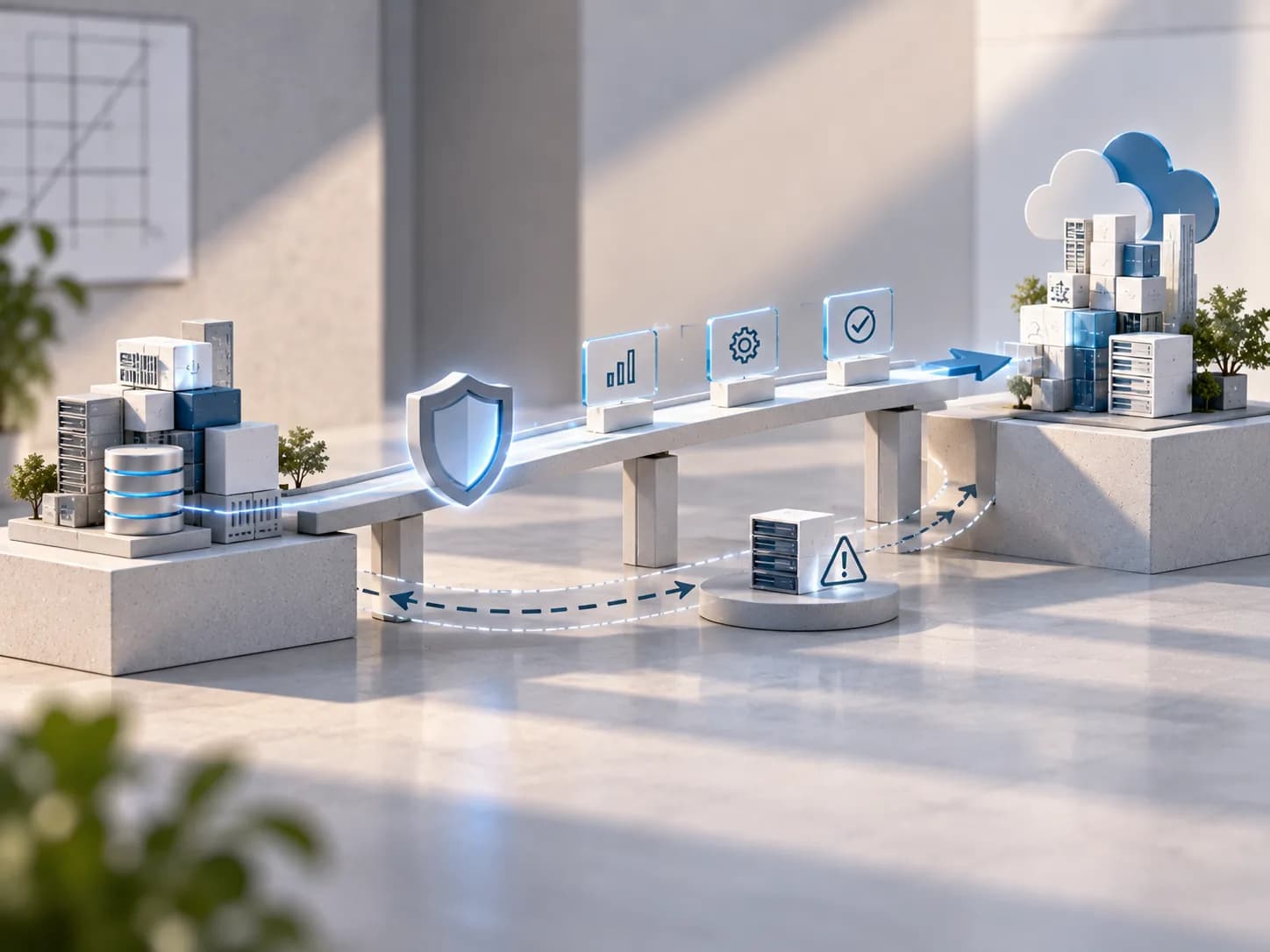
That is a sequencing commitment as much as an engineering one. The operations the business runs on today are protected, and the path to the new solution is built alongside them rather than through them.
Adoption is progressive: the business moves across in stages it can absorb, and each stage has to produce a visible improvement rather than a promise of one. Where the solution needs to keep evolving after launch, we stay involved rather than treating go-live as the end of the engagement.
The longer ambition is to be the technology engagement partner SMEs and startups trust, and to build reusable IP and products of our own—so that each implementation takes less time, less cost and less go-to-market effort than the one before it.
How we work
Five operating principles. They decide what we take on, how we scope it, and when we tell a client to stop.
01
Understand the business before the system.
02
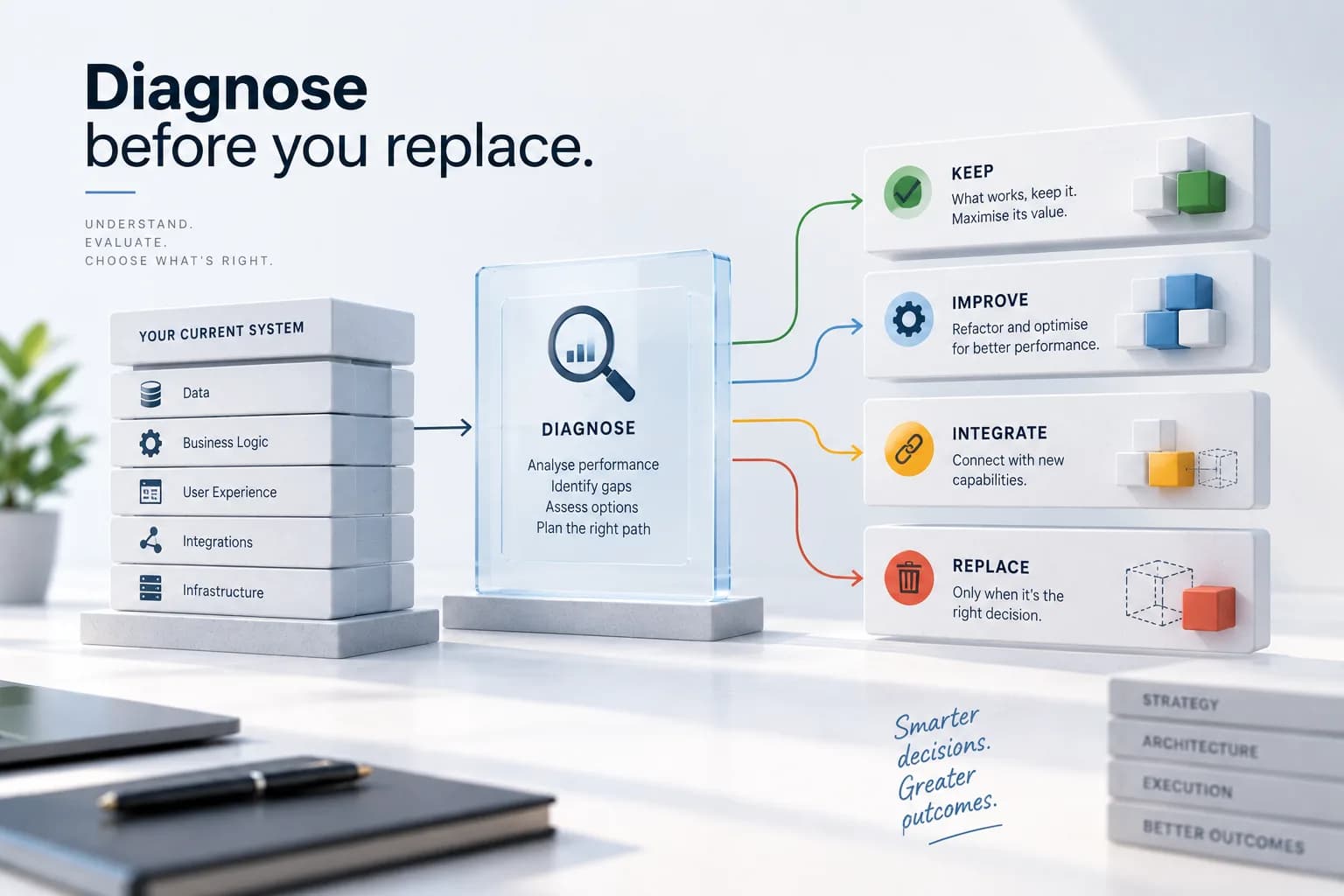
Diagnose before you replace.
03
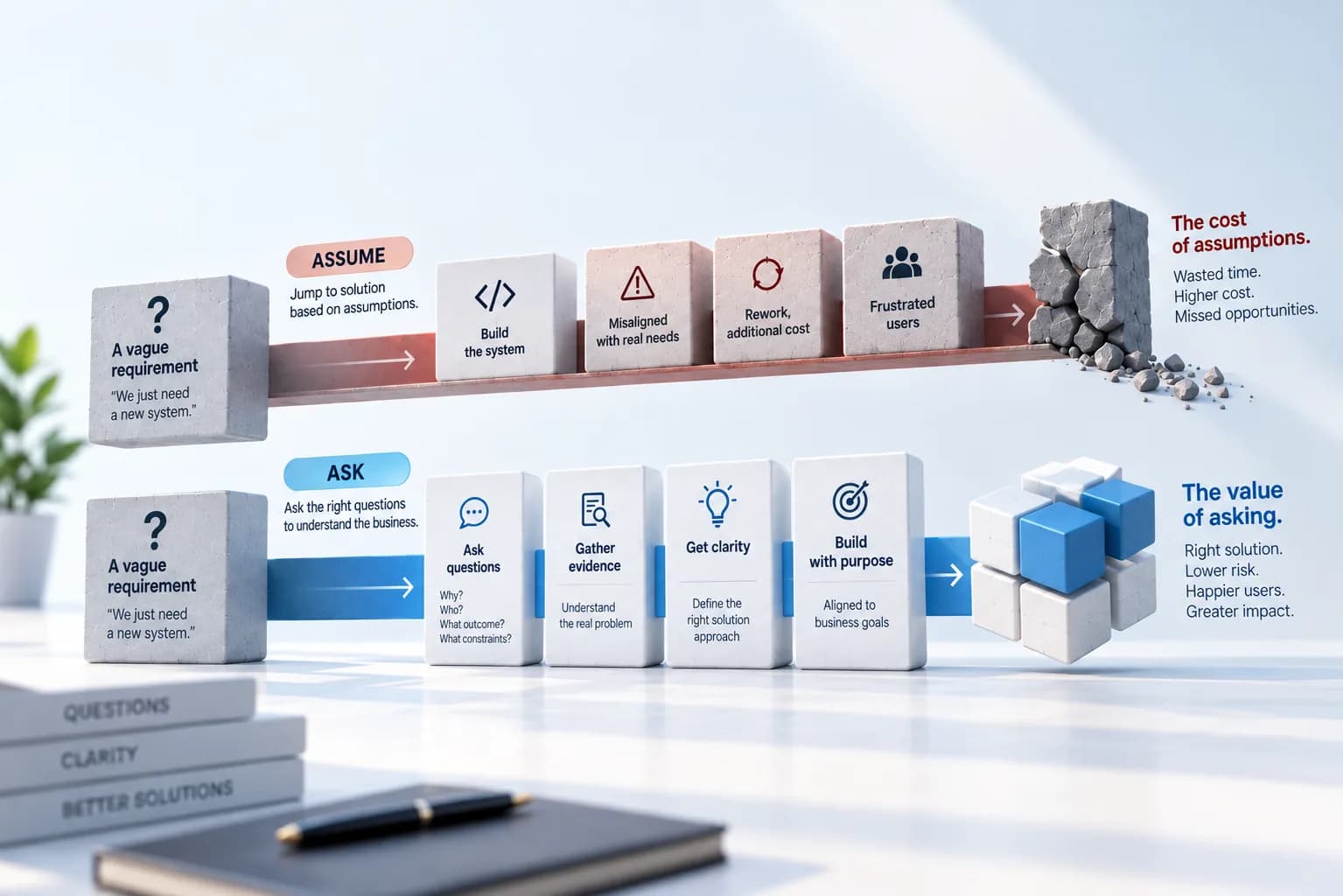
Ask before you assume.
04
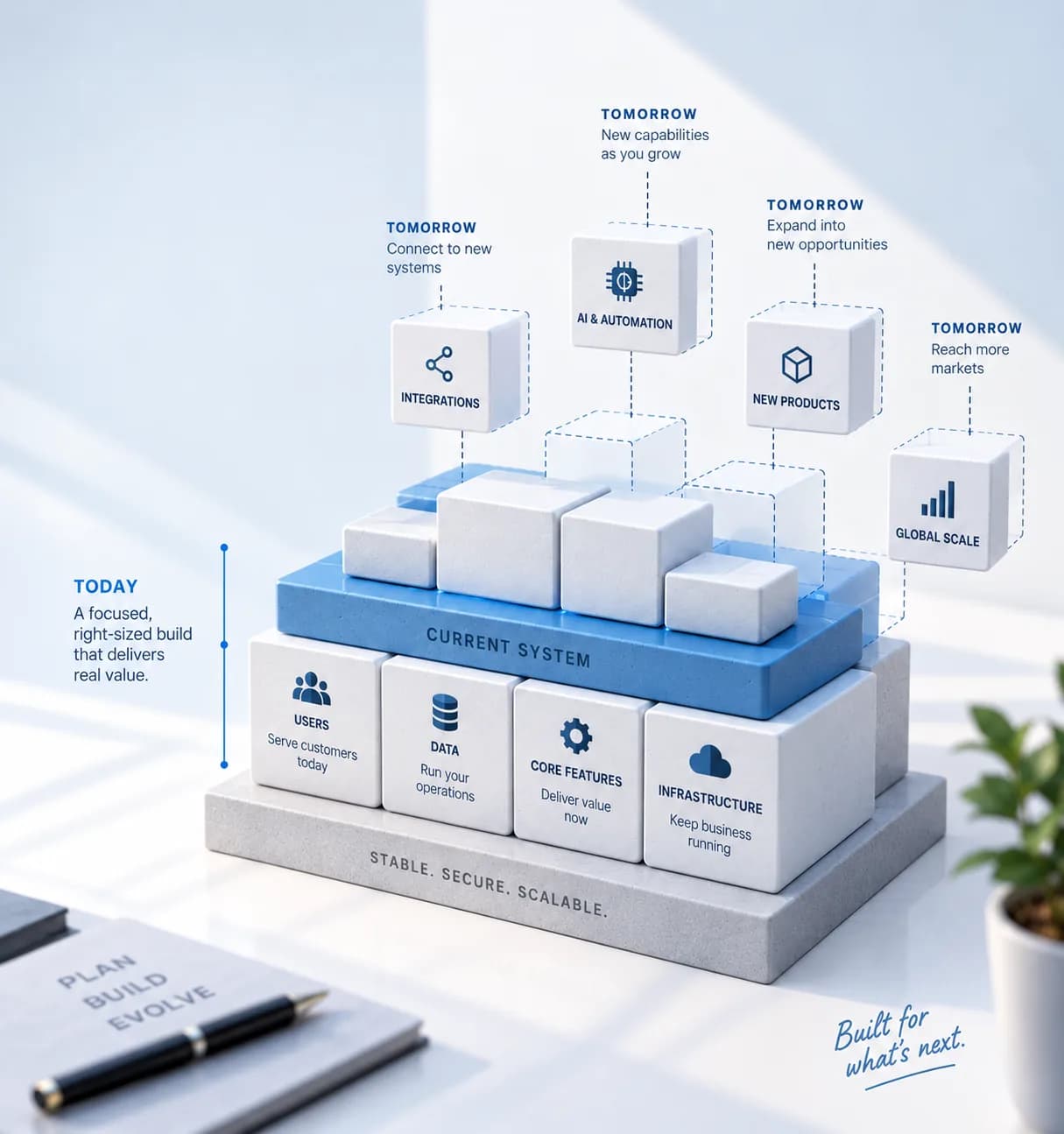
Build for today. Design for tomorrow.
05
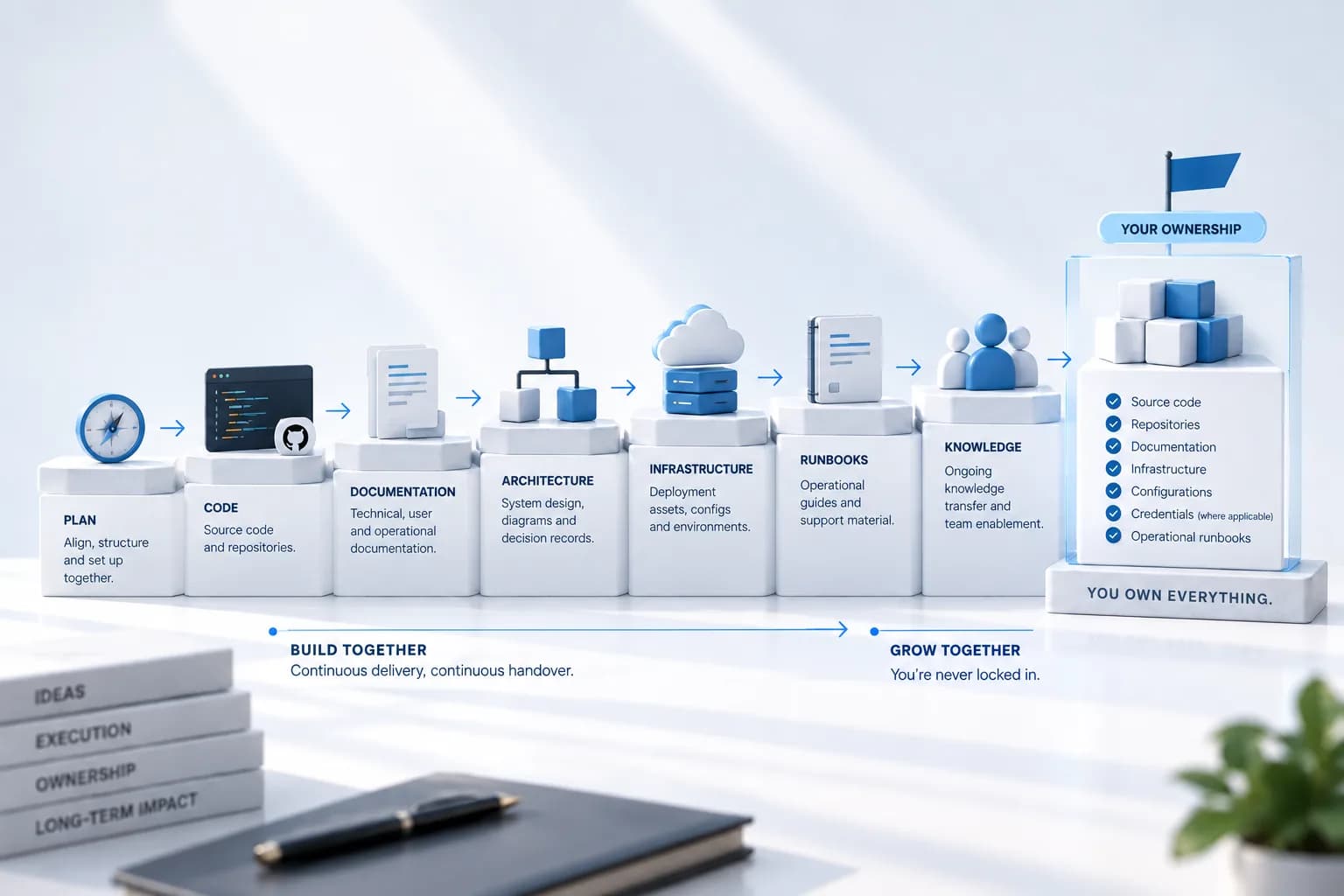
Handover as we go.
The rules behind every technology decision we make.
Different projects need different technologies, teams and delivery models. These five stay constant, because they decide how we diagnose a problem, where we make trade-offs, and how we protect the business while the change is underway.
01
Context
Business before technology
Technology is a means to an outcome. We establish what should improve for the business before deciding what should be built.

02
Diagnosis
Diagnosis before prescription
A request describes what someone believes the solution should be. We investigate the underlying constraint before accepting that assumption.

03
Reuse
Reuse what works
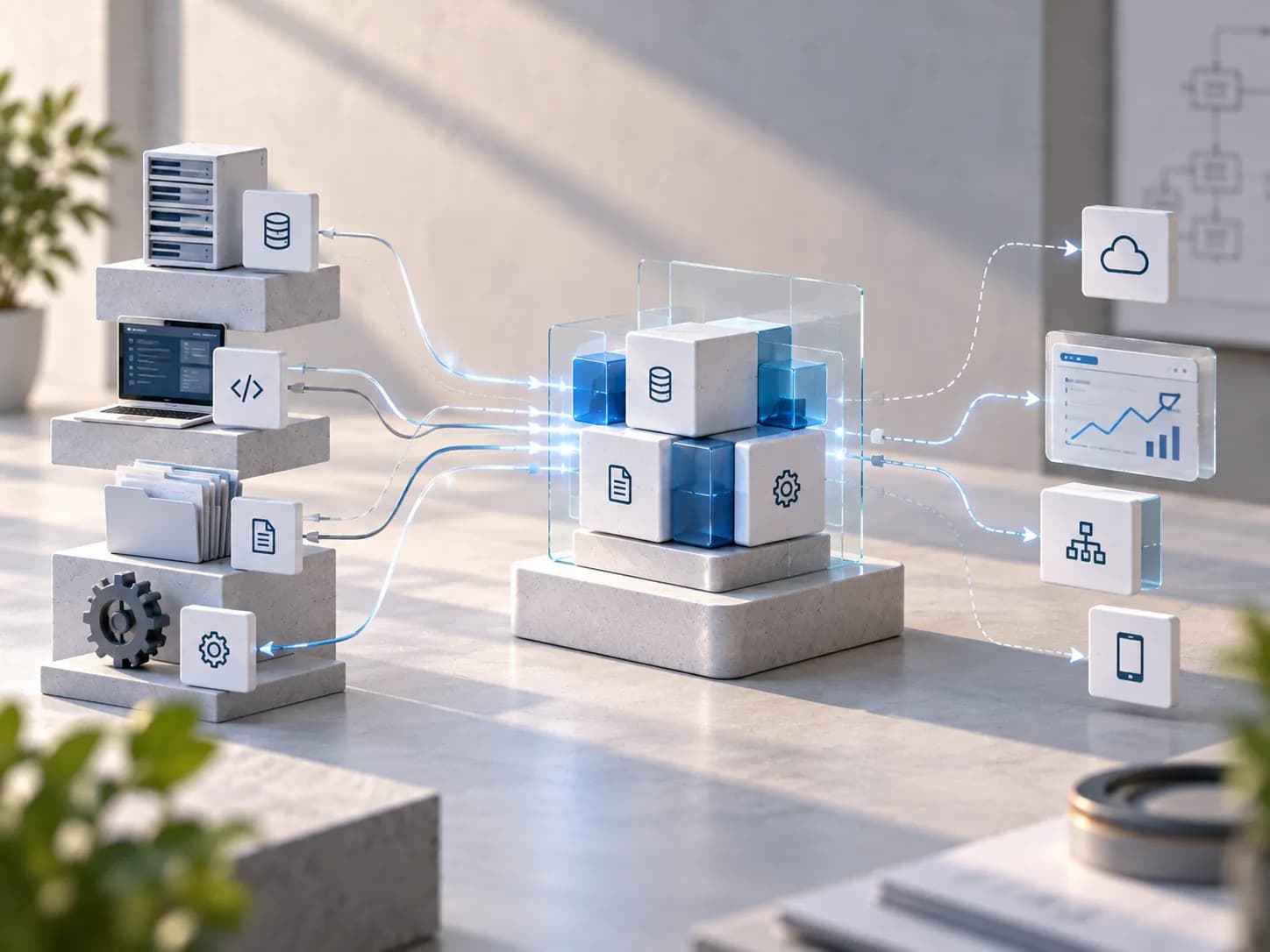
Existing systems carry investment, knowledge and operating history. We keep what remains useful and spend effort where change creates value.
04
Measure
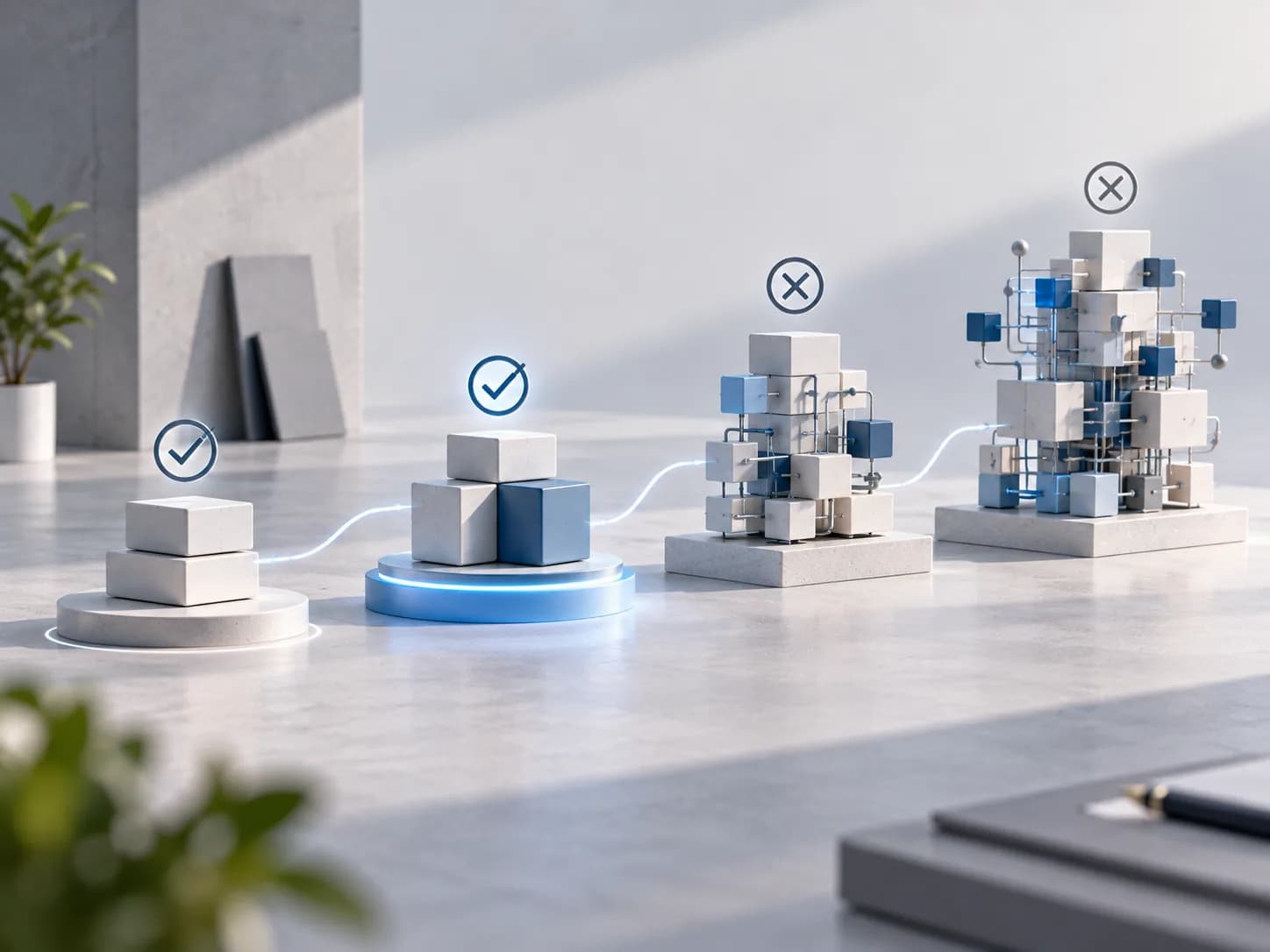
Choose the right level of complexity
More sophisticated architecture is not automatically better architecture. We choose the simplest approach that responsibly meets today's requirements.
05
Continuity
Protect the business you have while planning the one you want
Transformation should not create unnecessary operational risk. We plan for staged transition and for recovering when assumptions turn out to be wrong.
What we commit to before we start
Every engagement carries these, whether or not they are asked for.
- A named senior engineer accountable for the engagement. One person owns the outcome from the first conversation to handover — not an account manager relaying questions to a delivery team you have never met.
- A working product in your environment within the first month. Something real, running where you can use it, inside the first month. Progress you can operate is worth more than progress you have to take on trust.
- Every technology decision comes with a reason. The trade-off, the alternatives we considered and why we chose what we chose, written down as we go, so the next team does not have to relitigate it.
- No lock-in. Nothing we build depends on us to keep running. If you decide to take the work elsewhere, there is no technical or commercial obstacle in the way.
- We own the engineering. You own the product. Engineering judgment, quality and delivery are our responsibility. Direction, roadmap and the asset itself are yours, throughout.
You own everything we build.
Everything produced during an engagement is yours, in your accounts and your repositories as the work happens rather than transferred at the end of it.
- Source code
- Every repository, with its full commit history, and the intellectual property in what it contains.
- Documentation
- Architecture documentation, technical documentation, and the decision records behind both.
- Infrastructure
- Infrastructure assets, deployment assets and the configurations that run them.
- Accounts
- Accounts and credentials for every service the product depends on, registered to you from the start.
- Designs
- Design source files, component libraries and the tokens behind them.
- Operational handover
- Operational runbooks, user guides and the supporting project documentation your team needs to run it without us.
Our relationship should continue because we remain useful—not because leaving us is difficult.
Where we are
The numbers we would want to see if we were choosing a partner.
50+
Engineers
15 Years
Engineering Experience
30+
Clients Served
50+
Projects Delivered
6+
Countries & Regions Served
6+
Industries Served
Who you will work with
The people who scope the work are the people who deliver it. There is no handover to a delivery team you have not met.
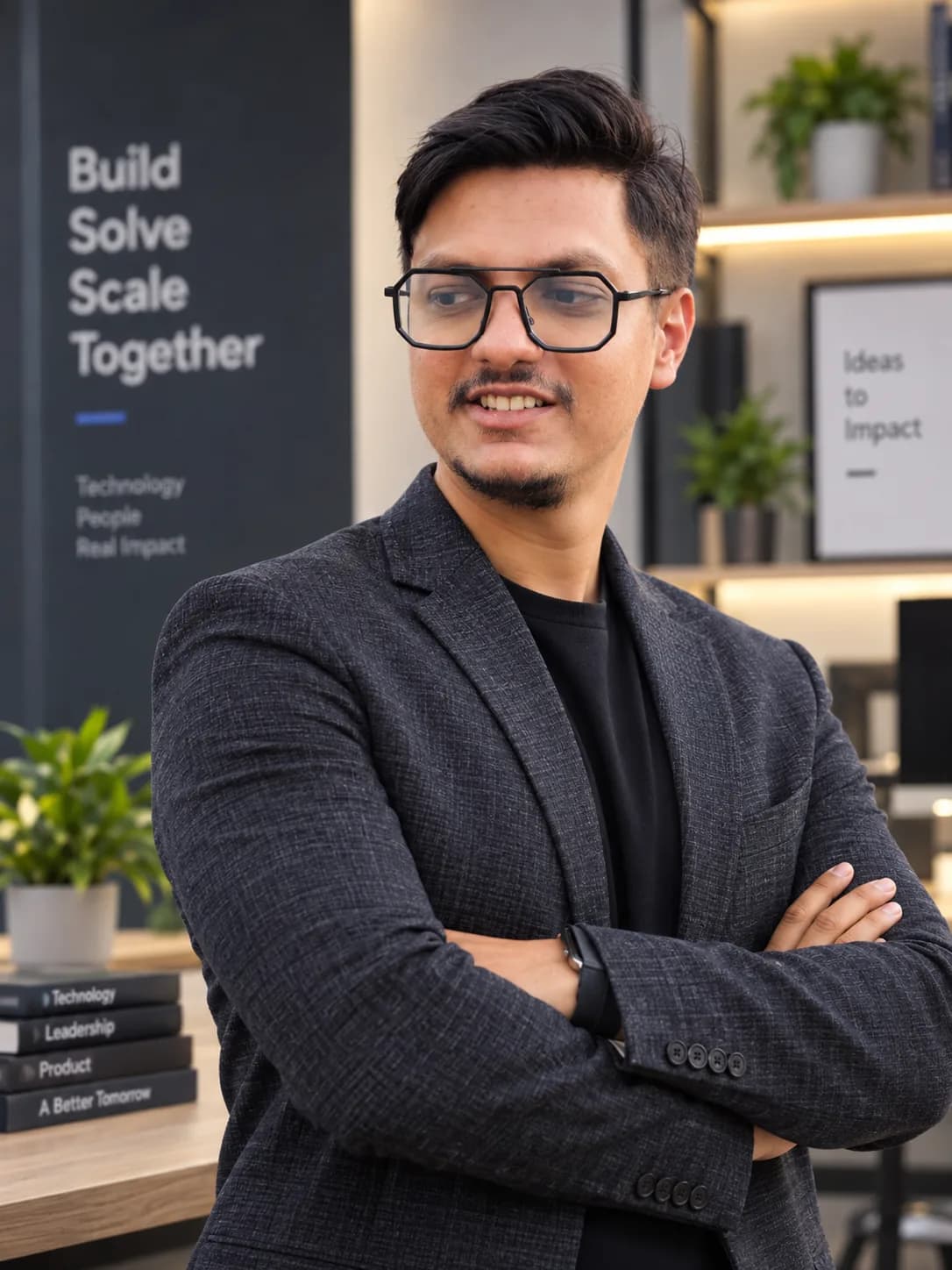
Amit Agarwal
Founder
Fifteen years in software engineering and a Bachelor's in Technology. Amit founded CipherCru in 2021 on one conviction: understand the business before writing the code. That conviction still shapes every engagement we take on.

Bharat Saini
VP — Business Development
Ten years in business development, across solutions, GCC engagements and strategic partnerships. Bharat is usually your first conversation with CipherCru, and treats it as a question of fit rather than a sale: what you need, and whether we are the right team to build it.
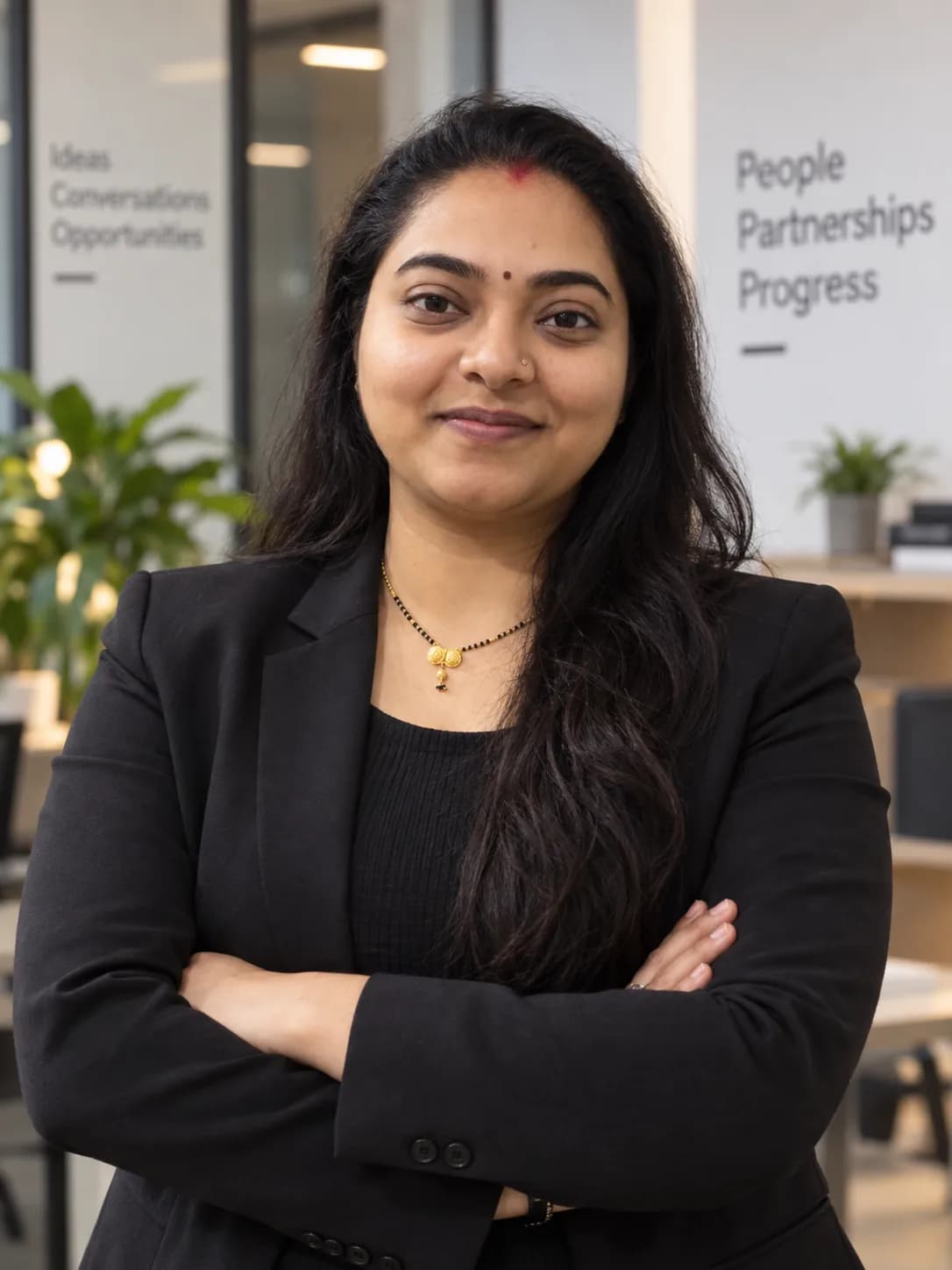
Krati Saxena
Senior Business Analyst
Seven years of turning what a business needs into what a team can build. Krati authors the BRDs and FRDs, runs sprint planning and keeps the documentation current, so requirements stop being guesswork and every sprint starts from something agreed.
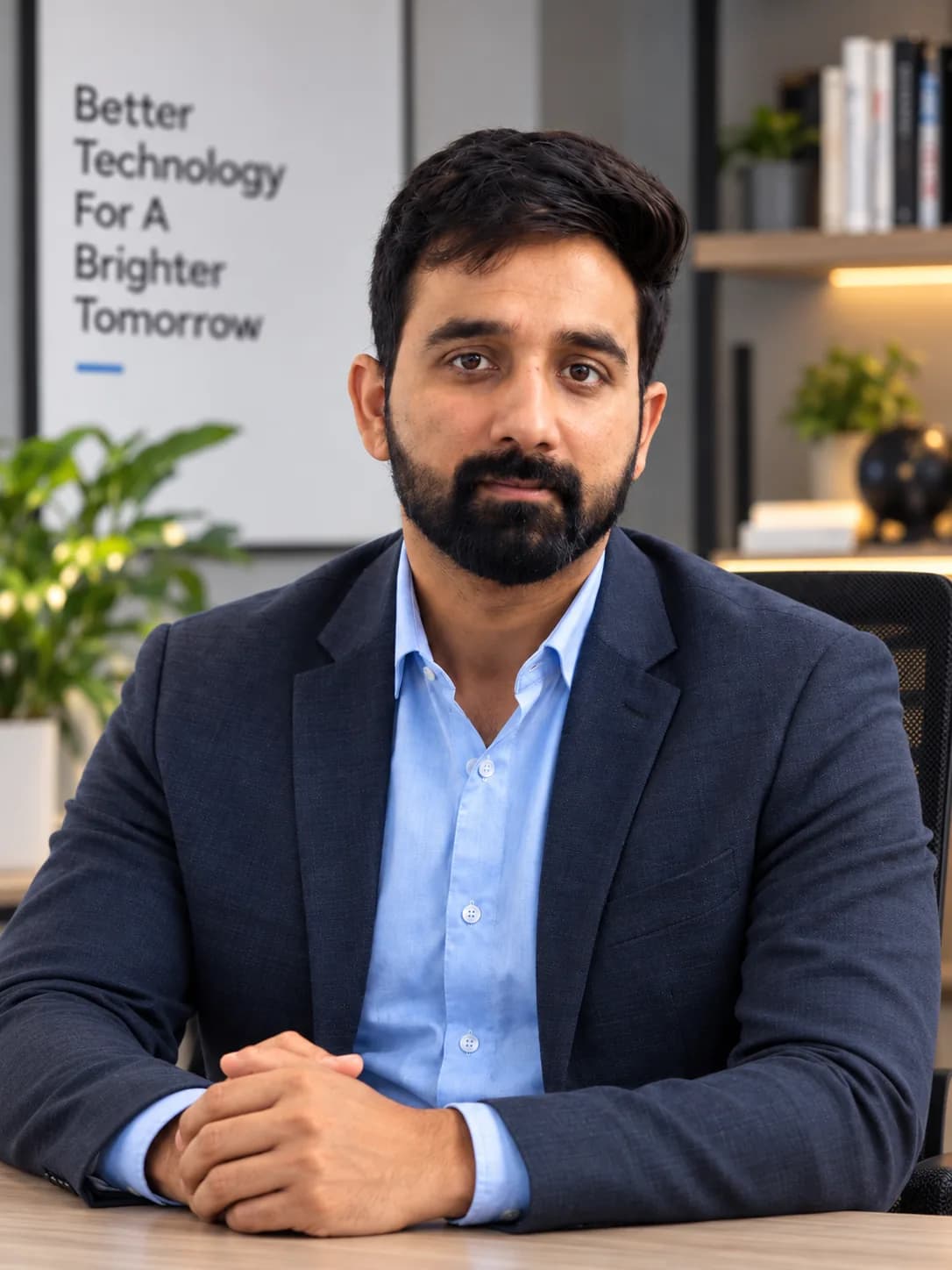
Karan Singh Rathore
Associate Delivery Manager
Nine years across web and mobile development, now leading delivery. Because Karan has built the kind of software being planned, estimates stay grounded, risks surface early, and progress reports describe what is actually working.
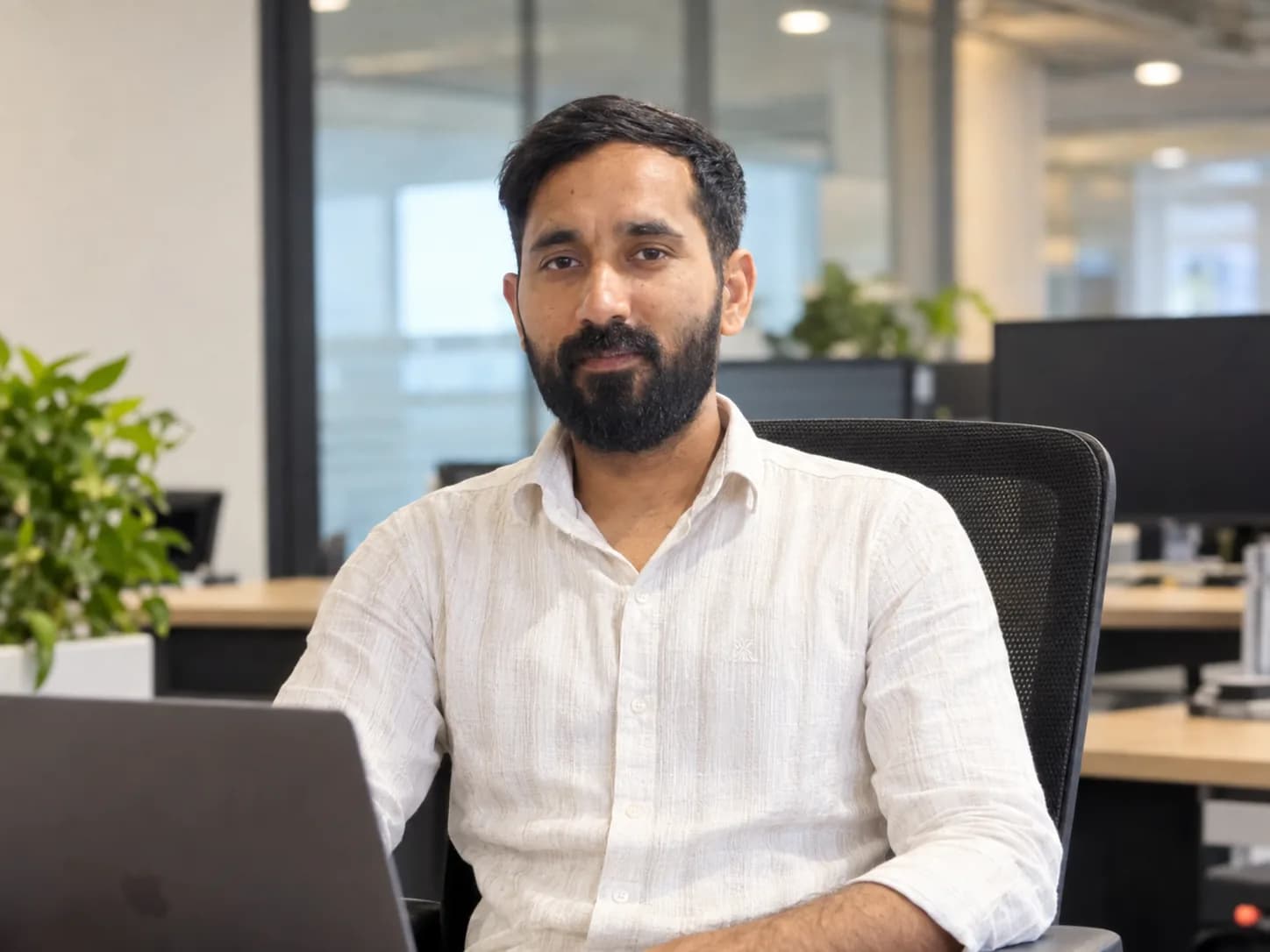
Kunal Singh Rathore
Senior Full Stack Engineer
Five years building across the full stack, from the interface a user touches to the services and data behind it. Kunal carries a feature from first commit to production, which means fewer handoffs, fewer gaps between layers and fewer surprises at release.

Mihir Rathi
Senior Software Engineer
Five years of writing software meant to outlast its first release. Mihir brings a senior engineer's habits to every engagement: code that is reviewed, tested and readable, so the system you own at handover is one your team can keep building on.
CipherCru has been a trusted technology partner for us because they understand that successful software delivery goes far beyond writing code. Amit and his team bring strong engineering judgement, ownership, and transparency to every engagement. Whether we are evaluating an opportunity, designing a solution, or delivering for a client, we can rely on CipherCru to approach it with the same level of responsibility we would expect from our own team.
Have a decision you are stuck on?
Bring us the constraint, not the spec. We will tell you what we would do and why.