

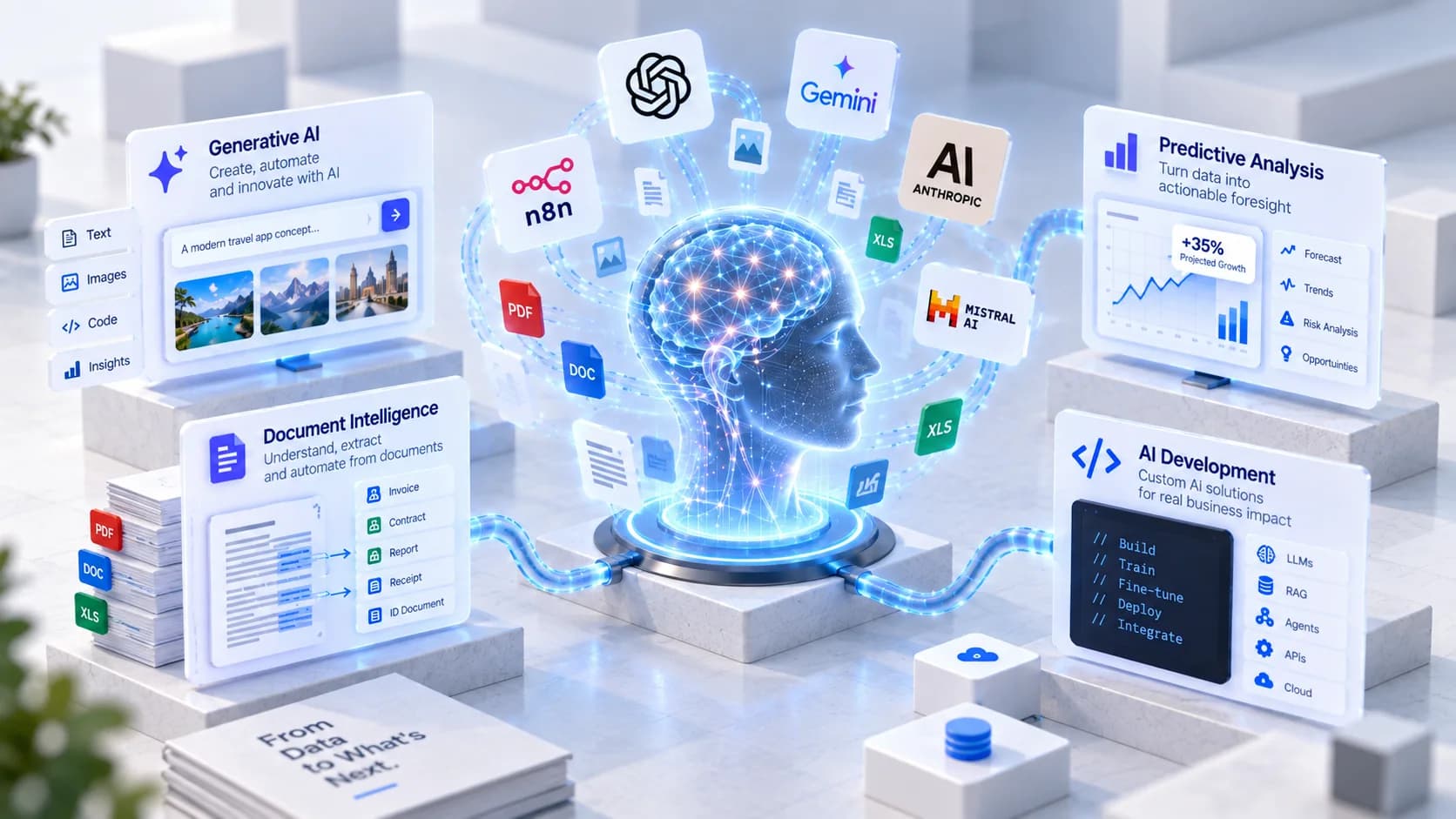
AI Development Services
Applied AI with a measurable job to do. We find out whether a model can do that job on your data before anyone commits a year to building around it.
- Typical duration
- Three to nine months
- Team shape
- Two to four senior engineers
- Starts with
- A four-week evaluation
Evaluated before it is built
Most AI proposals are answerable in weeks. The expensive ones are those nobody checked before committing a year to them.
The hard part of an AI project is almost never the model. It is deciding what the model is allowed to be wrong about, and what happens when it is. That question has a cost attached, it can be answered on real data in a few weeks, and answering it first is the difference between a system that changes a business decision and a pilot that has been running for eleven months without deciding anything. So the first thing we deliver is the evaluation, and it is written so that it can honestly recommend not building.

Where AI projects quietly fail
Almost none of the AI work we are called in to rescue failed on the model.
What we are usually called in to fix
- A demo that convinced everyone and never held up on real data
- Accuracy nobody measured, because nobody agreed what accurate meant
- A model that worked until the documents changed shape in March
- Answers a regulator would ask about and nobody can explain
- A pilot that has run for eleven months and decided nothing
How we work instead
- Measure whether it can work before building anything around it
- Agree what accurate means, in the business's own terms, in writing
- Test on the data you actually receive, not on a cleaned sample
- Keep a person in the loop wherever being wrong is expensive
- Recommend stopping when the evaluation says stop
What we build
Seven kinds of AI engagement. Most clients need two or three of them, and the first conversation is usually about which.
What that involves
The work that decides whether a model changes a business outcome or only impresses in a demo.
Evaluation before build
The first deliverable is a decision, not a model.
We measure whether a model can do the job on your own data, against a definition of accurate that you agreed in advance. The result is a written recommendation, and it is allowed to say no.
Generative interfaces
Assistants and drafting tools built on retrieval, so an answer can be traced to a source.
Predictive models
Scored against what actually happened, and attached to the decision they exist to change.
Document intelligence
Extraction that holds up on scans, photographs and forms filled in by hand.
Retrieval and vector search
Chunking, indexing and ranking, which is where most answer quality is won or lost.
Human-in-the-loop design
Where the model acts alone, where it drafts, and where a person still signs.
Evaluation in production
Accuracy tracked after launch, so a quiet regression is visible before a customer finds it.
What we build with
Chosen for what has to be explained afterwards, and for who has to run it once we have gone.
- Anthropic
- OpenAI
- Gemini
- Llama
- Mistral



- Python
- LangChain
- PyTorch
- Hugging Face
- scikit-learn


- pgvector
- PostgreSQL
- Elasticsearch
- Redis




- AWS
- Azure
- Google Cloud
- Docker
- Kubernetes



- MLflow
- Weights & Biases
- GitHub Actions
- Sentry
- Datadog


Where we have built this
Sectors where a wrong answer has a cost we can name, which is the only place this work is worth doing.
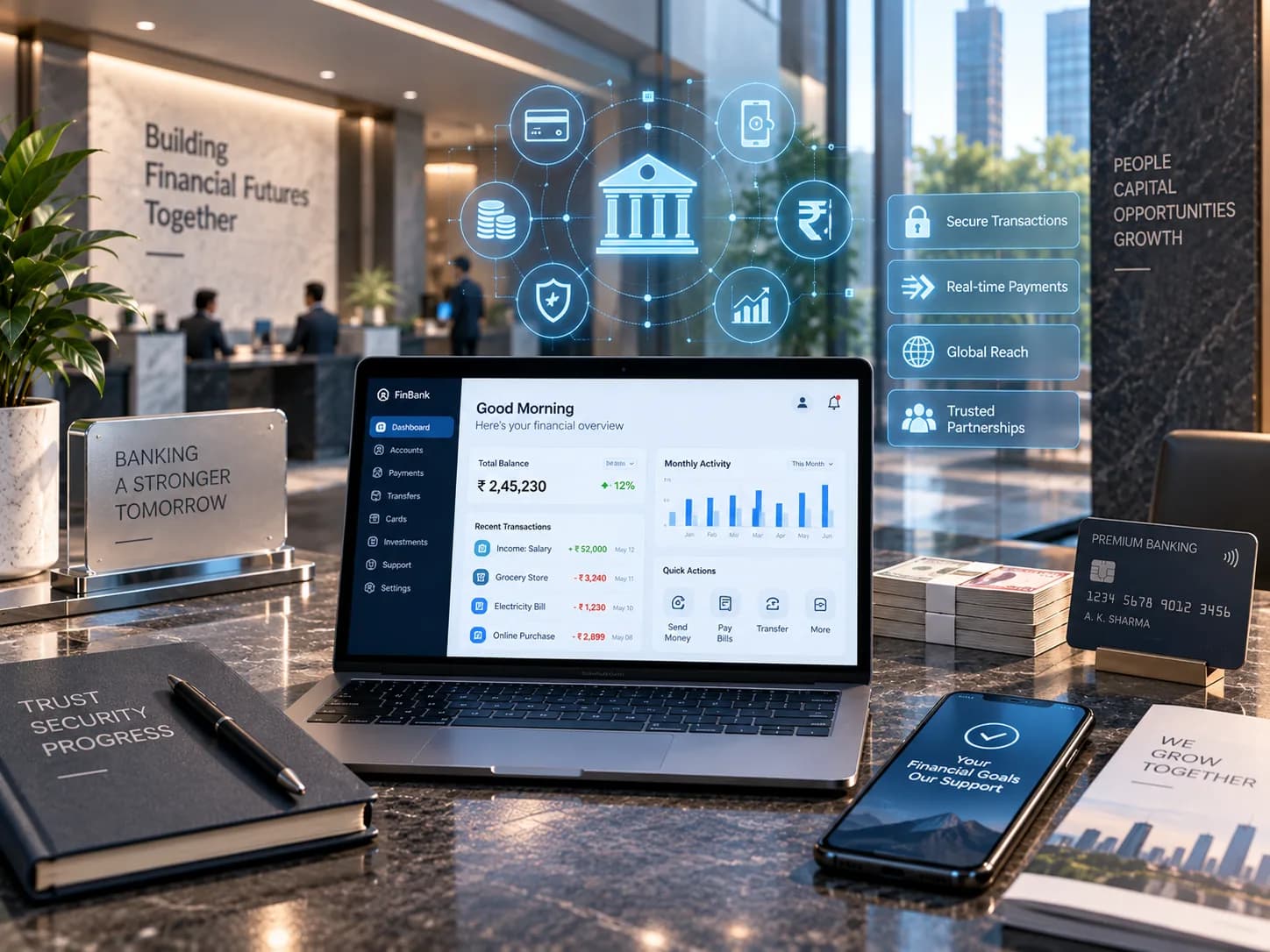
Fintech & BFSI
Secure, reliable systems for businesses built on trust.
We build and modernize financial platforms, workflows, integrations, and customer-facing applications where reliability, data integrity, auditability, security, and performance are fundamental to the business.
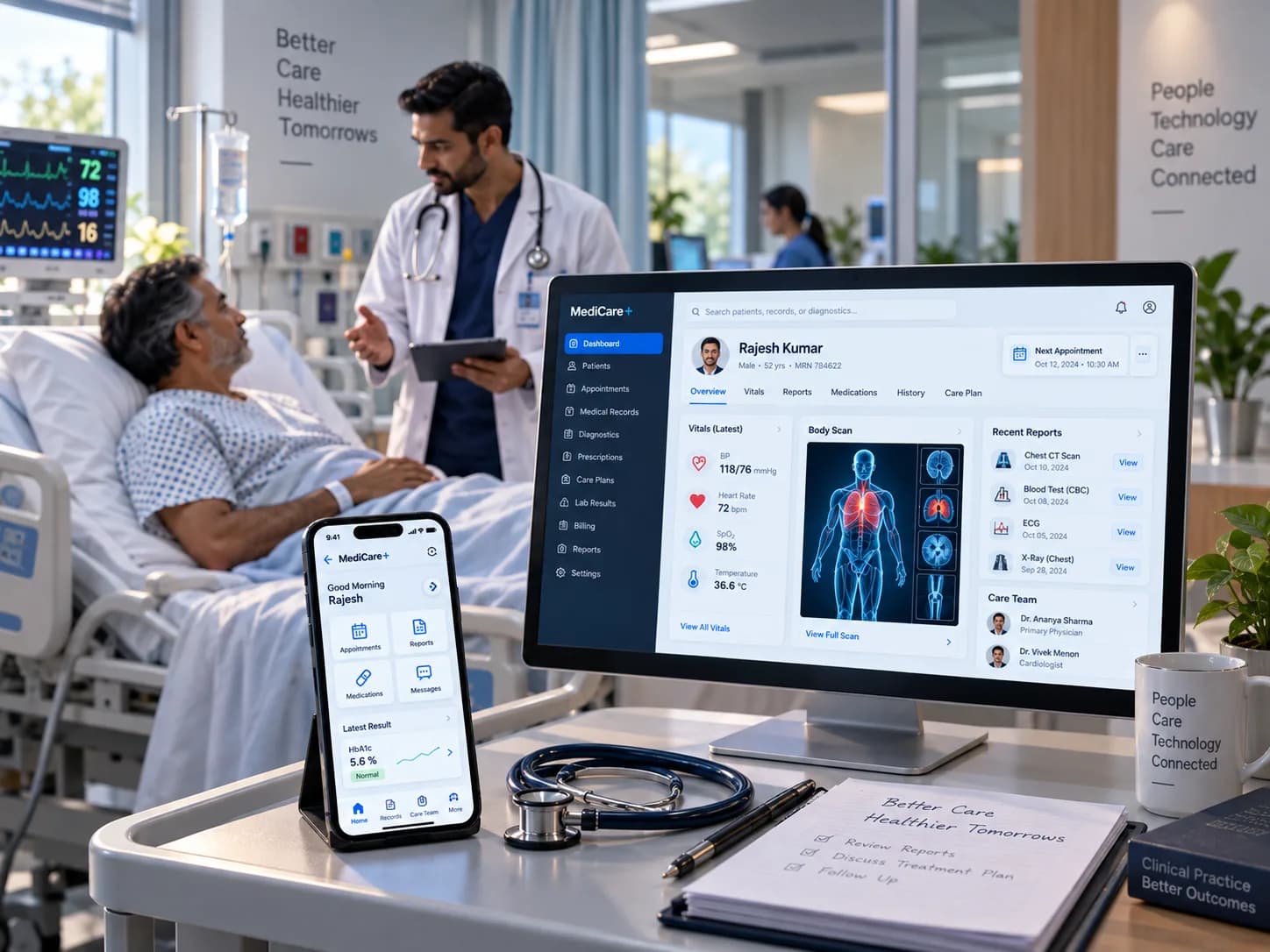
Healthcare
Technology that connects complex care and operational workflows.
We help build digital healthcare platforms, operational workflows, integrations, and data-driven applications designed around reliability, secure information handling, usability, and the realities of interconnected healthcare systems.
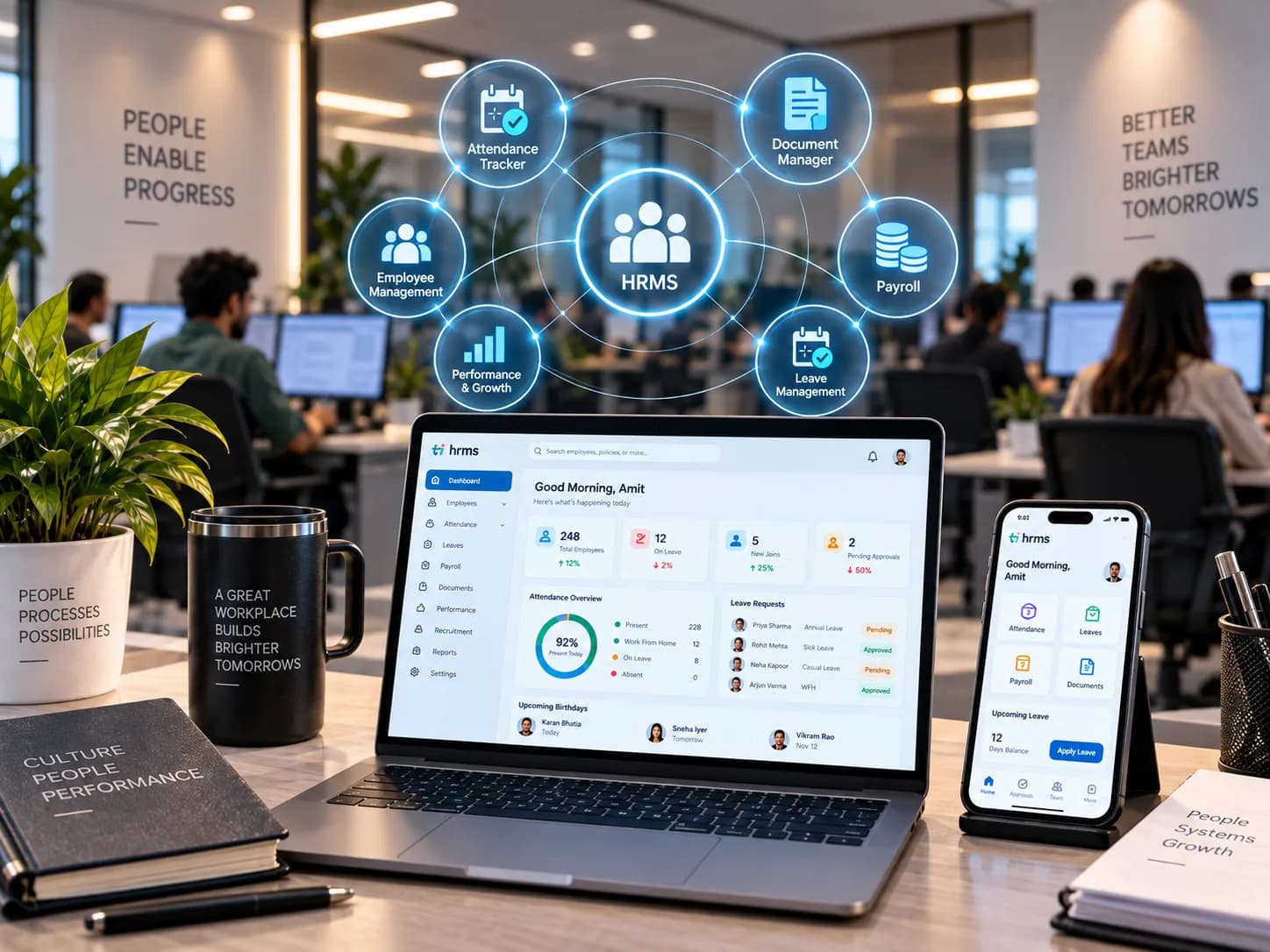
HRMS
Workforce systems built around how organisations actually operate.
We build and improve workforce platforms spanning recruitment, onboarding, employee management, attendance, operational workflows, reporting, and integrations, reducing friction across the employee lifecycle.
What you end up with
Stated from your side rather than ours.
A decision on whether to proceed
An evaluation that can honestly recommend not building, and sometimes does.
Measured accuracy, not a demo
A figure taken on your own data, with the method written down beside it.
Answers you can explain
Sources, thresholds and the human step, recorded for the people who will ask.
A team that can run the next version
Your engineers run the evaluation and the deployment before we leave.
How an AI engagement runs
The same five stages whichever of the services above does the work.
Diagnose
What decision the model would change, and what it costs when it is wrong.
Decide
Whether to build at all, with the evaluation attached. Often the answer is a rule, not a model.
Prove
The hardest case tested on your own data, scored against the agreed measure.
Deliver
Built in slices, each one behind a switch and monitored from the day it is on.
Hand over
Your team runs it with us watching, then without us.
Related work
Engagements where the decision mattered as much as the delivery.


Questions about AI development
The ones we are asked most often before a first conversation.
How do we know it will work before we commit?
Do we need to train our own model?
Does our data end up training someone else's model?
How do you measure accuracy?
What happens when the model gets worse?
What happens after launch?
Have an AI idea worth testing?
Tell us the decision you want it to change. We will tell you whether it can.