

Web Development Services
Platforms your team can extend after we leave. We decide what should be built, then build it in slices that go live as they are finished.
- Typical duration
- Six to fourteen months
- Team shape
- Two to five senior engineers
- Starts with
- A three-week diagnostic
Web work that survives the handover
Most web platforms are not hard to build. They are hard to keep changing two years later, once the people who built them have gone.
What makes a platform expensive later is almost never the framework it was built on. It is that the reasoning was never written down: why the data model splits where it does, which system is authoritative when two disagree, what the retry actually does when the payment provider is slow. Two years on, those answers live with people who have moved on, and every change starts as an investigation before it becomes a change. So we write the decisions down as they are made, and we build in slices your engineers work on alongside ours from the first month, which is what makes a handover an administrative event rather than a project of its own.

What usually goes wrong, and what we do instead
The failures we are called in to fix are rarely about the code.
What we are usually called in to fix
- A platform only its original authors can safely change
- Features built to a specification nobody re-checked against the business
- Infrastructure held together by one person's memory
- A test suite that passes and proves nothing
- A roadmap made of workarounds for an integration that was never finished
How we work instead
- Diagnose the business constraint before proposing a system
- Ship a real slice in the first month, in production
- Write down every significant decision and why it was made
- Hand over as we go, so there is no handover project at the end
- Leave infrastructure your team can rebuild from source
What we build
Ten kinds of web engagement. Most clients need two or three of them, and the first conversation is usually about which.
What that involves
The capabilities behind the work, including the ones clients most often did not know to ask for.
Product engineering
Features built in slices, each one live and usable before the next is scoped.
Data modelling
One record of truth per domain, and figures that reconcile back to it.
Integration
Translation layers rather than data copies, so no second source of truth appears.
Platform and delivery
Pipelines and environments your team can rebuild from source.
Performance
Measured against real traffic profiles, not a synthetic benchmark.
Security and access control
Roles, audit trails and secrets handling built in from the first commit.
What we build with
Chosen for what the system has to do and who has to run it afterwards.
- TypeScript
- React
- Next.js
- Angular
- Tailwind CSS
- Vite






- Java
- Spring Boot
- Node.js
- Python
- GraphQL
- REST


- PostgreSQL
- MySQL
- MongoDB
- Redis
- Elasticsearch
- dbt






- AWS
- Azure
- Google Cloud
- Docker
- Terraform
- GitHub Actions




- OpenTelemetry
- Grafana
- Sentry
- Datadog


Where we have built this
Sectors where we have shipped production web systems and know the constraints before the first meeting.

Fintech & BFSI
Secure, reliable systems for businesses built on trust.
We build and modernize financial platforms, workflows, integrations, and customer-facing applications where reliability, data integrity, auditability, security, and performance are fundamental to the business.
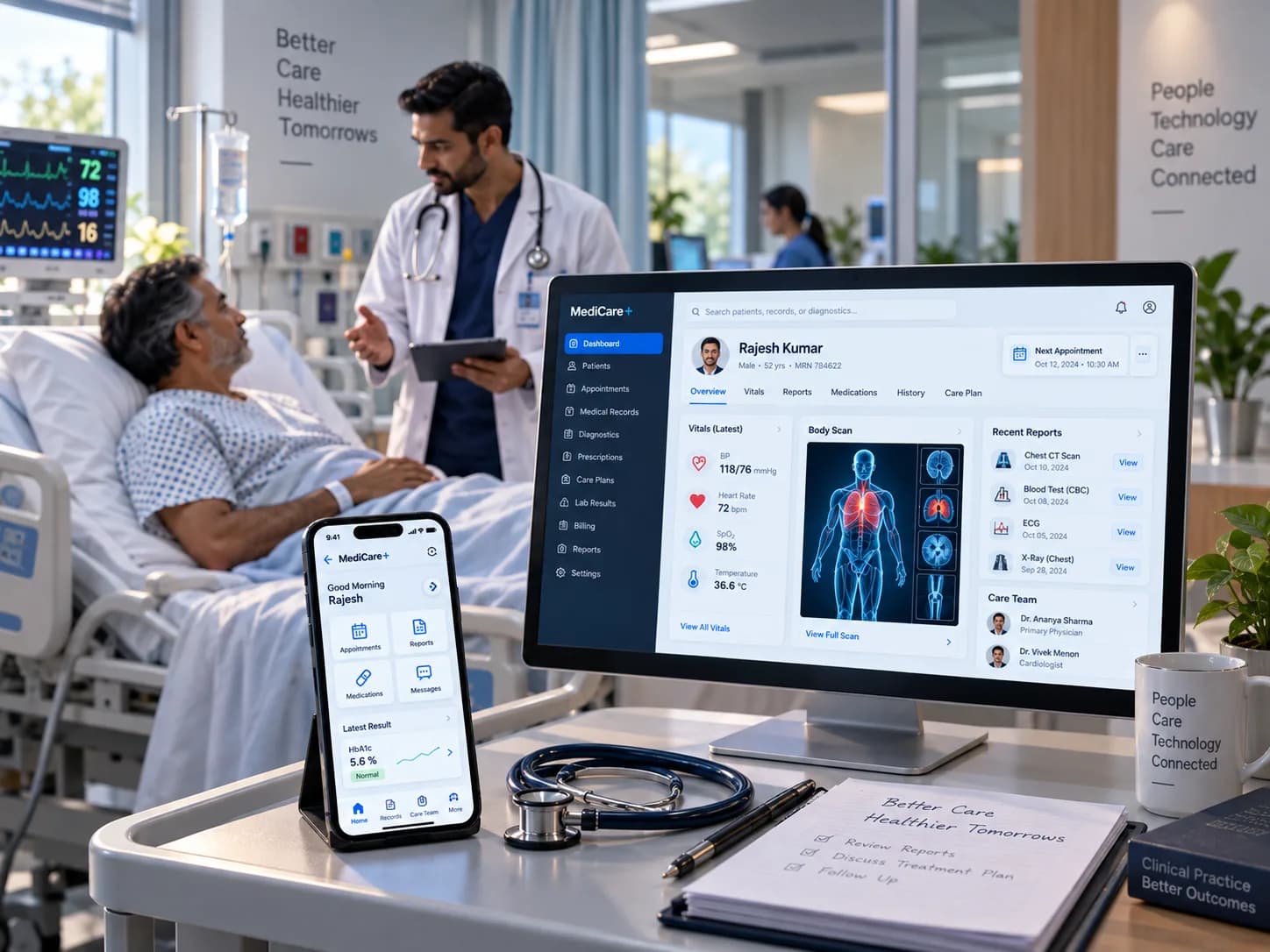
Healthcare
Technology that connects complex care and operational workflows.
We help build digital healthcare platforms, operational workflows, integrations, and data-driven applications designed around reliability, secure information handling, usability, and the realities of interconnected healthcare systems.
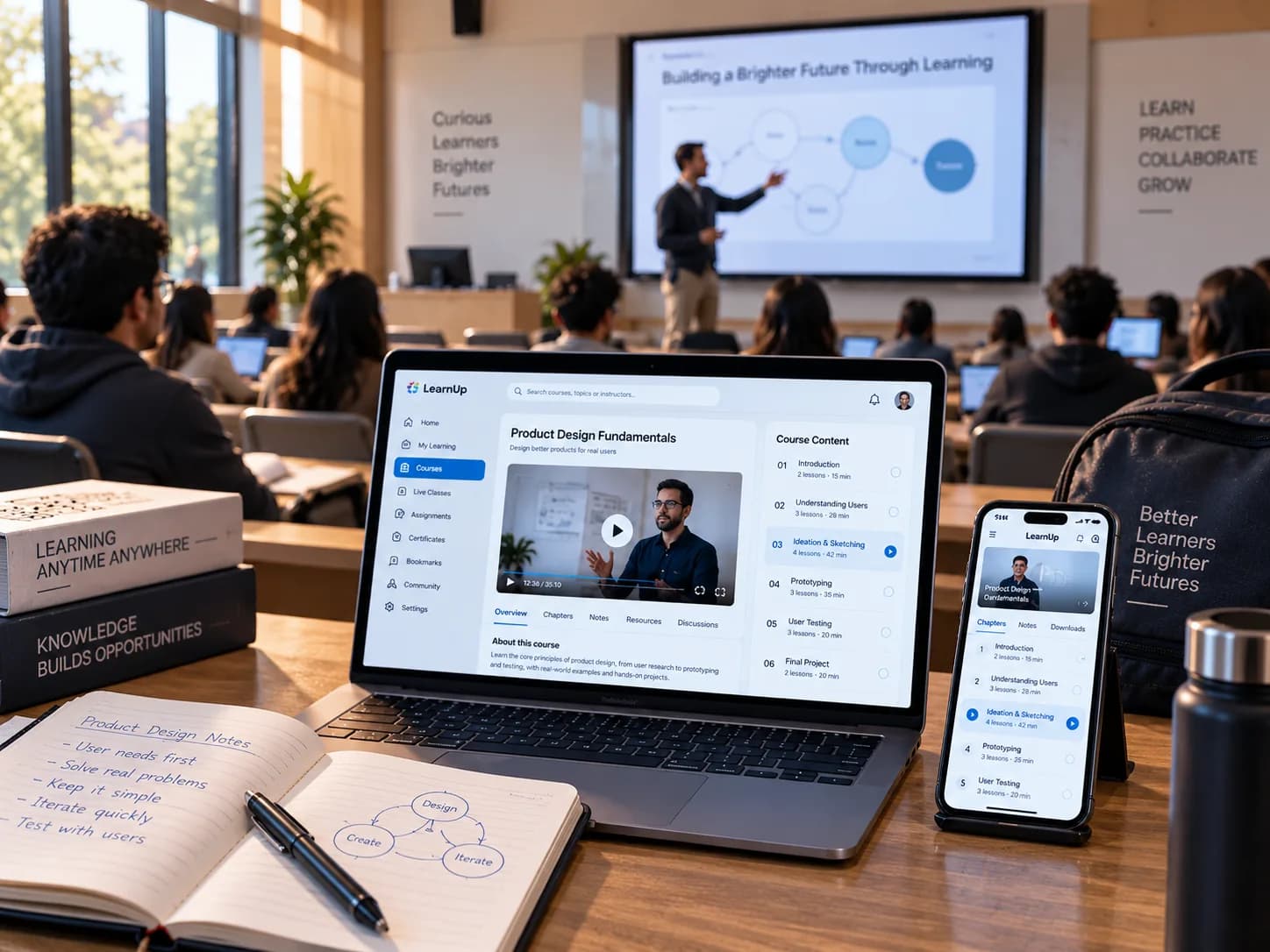
EdTech & eLearning
Learning platforms designed around engagement and scale.
From learner journeys and course delivery to assessments, administration, analytics, and integrations, we develop education platforms that make learning experiences easier to operate, evolve, and scale.

Food & Travel
Digital experiences that keep customers and operations moving.
We build customer journeys and operational platforms around ordering, booking, marketplaces, partner integrations, administration, and real-time workflows where experience and operational efficiency need to work together.
What you end up with
Stated from your side rather than ours.
A platform you own outright
Source, infrastructure and decision history, in accounts registered to you.
A team that can keep changing it
Your engineers ship alongside ours from the first month, not after handover.
Something live in the first month
A real slice in production, so the risk is tested before the budget is.
A written record of every decision
Why each choice was made, and what would make us revisit it.
How a web engagement runs
The same five stages whichever of the services above does the work.
Diagnose
What the business needs, what constrains it, and what already exists.
Decide
Options with trade-offs, and a written recommendation. Sometimes it is to stop.
Prove
The riskiest assumption tested in production, on real data.
Deliver
Built in slices, each one live and usable, documented as we go.
Hand over
Your team runs it with us watching, then without us.
Related work
Web engagements where the decision mattered as much as the delivery.


Questions about web development
The ones we are asked most often before a first conversation.
Will you work on a codebase someone else wrote?
Do you always use React and Next.js?
Is design included, or do we bring our own?
How large a team will you put on this?
Who hosts it, and who pays for that?
What happens after launch?
Have a web platform to build or fix?
Tell us the constraint you are working under. We will tell you how we would approach it.