


Cross Platform App Development Services
One codebase is a decision, not a default. We build with React Native and Flutter where they genuinely serve both platforms, and say so when they do not.
- Typical duration
- Four to ten months
- Team shape
- Two to four senior engineers
- Starts with
- A two-week platform assessment
One codebase, where one codebase is right
Sharing code saves money until the day it does not. The question worth answering first is which parts should be shared at all.
Cross-platform is sold as a way to halve the cost of a mobile product, and for a large class of applications that is exactly what it does. It stops being true at the point where the app needs something the framework does not reach, and by then the decision is usually three years old and nobody remembers making it. So we decide the boundary deliberately: what is shared, what stays native, and the conditions under which we would move a surface across that line.

Where sharing a codebase stops paying
Cross-platform goes wrong when it is chosen as a default rather than decided.
What we are usually called in to fix
- A shared codebase with two platform-specific forks growing quietly inside it
- Native modules written once, by someone who has since left
- An app that feels borrowed on both platforms and native on neither
- A framework upgrade nobody dares run because the build is undocumented
- Performance problems that only appear on the older half of the install base
How we work instead
- Decide what is shared and what stays native before writing either
- Keep the native layer small enough for your own team to own
- Follow each platform's conventions, even where the code is common
- Exercise the framework upgrade path rather than deferring it
- Write down the conditions under which we would move a surface to native
What we build
Seven kinds of cross-platform engagement. Most clients need two or three of them, and the first conversation is usually about which.
What that involves
The engineering that decides whether a shared codebase is still cheaper in year three.
Shared interface engineering
One component layer that still respects each platform's navigation and gestures.
Native modules
Written where the framework runs out, and small enough for your team to maintain.
Shared backends
One API behind both stores, so a change lands once rather than twice.
Release engineering
Two store submissions from one pipeline, run by your engineers rather than ours.
Performance
Measured on the older half of your install base, where shared code shows first.
Exit routes
A written path to native for any surface that outgrows the shared layer.
What we build with
Chosen for how much can honestly be shared, and for what happens at the edge where it cannot.
- React Native
- Flutter
- Expo
- TypeScript
- Dart



- Swift
- SwiftUI
- Kotlin
- Jetpack Compose
- Node.js
- Java
- Spring Boot
- Python
- GraphQL
- REST


- PostgreSQL
- MongoDB
- Redis
- Firebase
- SQLite




- Fastlane
- GitHub Actions
- Sentry
- Datadog


Where we have built this
Sectors where one codebase has carried a production product, and we know where the boundary fell.

EdTech & eLearning
Learning platforms designed around engagement and scale.
From learner journeys and course delivery to assessments, administration, analytics, and integrations, we develop education platforms that make learning experiences easier to operate, evolve, and scale.

Healthcare
Technology that connects complex care and operational workflows.
We help build digital healthcare platforms, operational workflows, integrations, and data-driven applications designed around reliability, secure information handling, usability, and the realities of interconnected healthcare systems.

Fintech & BFSI
Secure, reliable systems for businesses built on trust.
We build and modernize financial platforms, workflows, integrations, and customer-facing applications where reliability, data integrity, auditability, security, and performance are fundamental to the business.
Fitness
Digital products designed to turn engagement into progress.
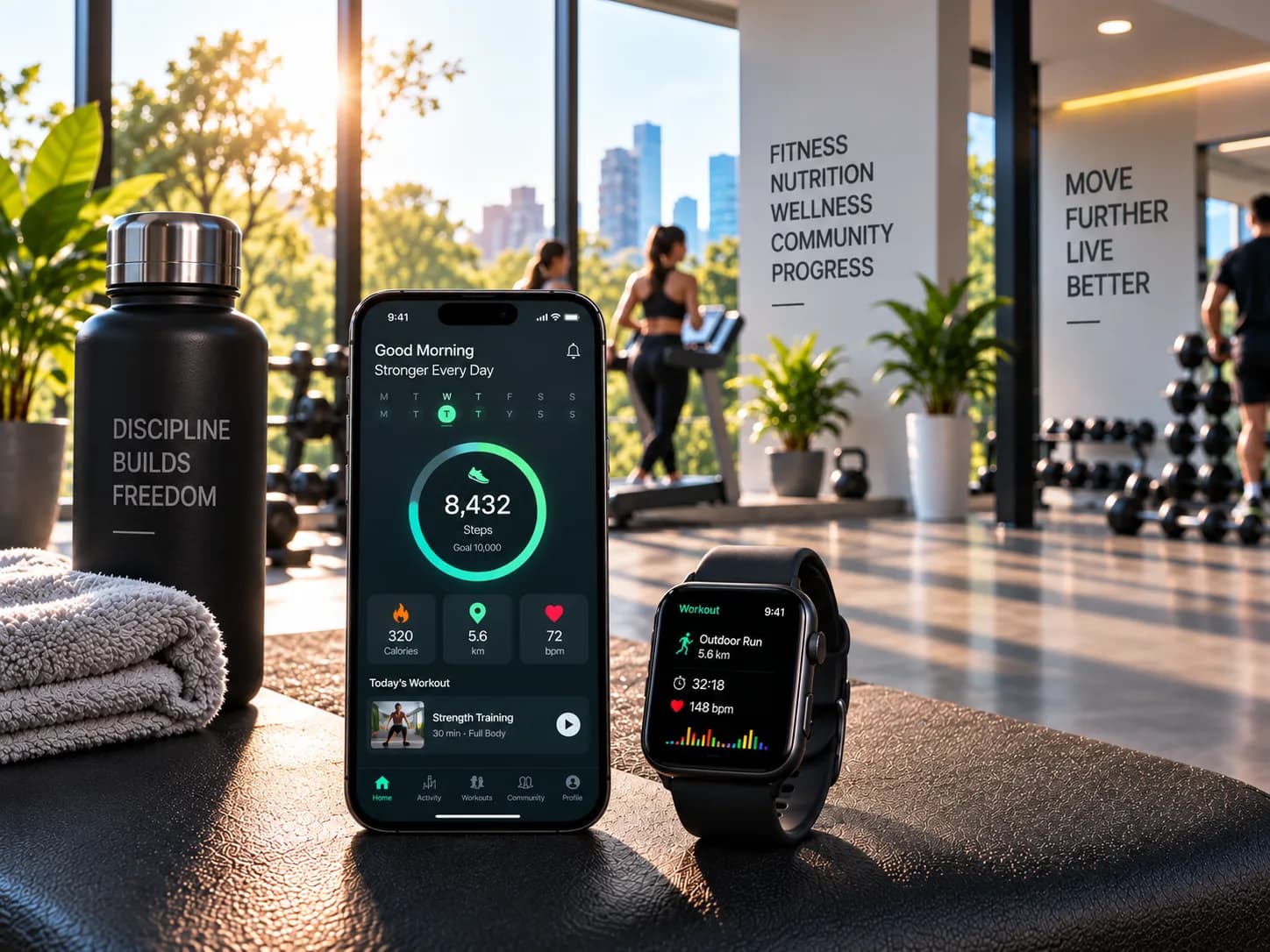
We create fitness platforms supporting member experiences, scheduling, subscriptions, progress tracking, coaching workflows, administration, and integrations, with usability and continued engagement at the centre.
What you end up with
Stated from your side rather than ours.
One codebase, two stores
A feature specified once, built once, and released to both platforms.
Native modules where they are needed
The shared layer stops where it stops paying, and that line is written down.
A migration path if you outgrow it
Any surface can move to native on its own, without rewriting the whole app.
A team that can run both releases
Your engineers ship to both stores from one pipeline before we leave.
How a cross-platform engagement runs
The same five stages whichever of the services above does the work.
Diagnose
What the two platforms genuinely need to share, and what they never will.
Decide
React Native, Flutter or native, with the trade-offs written down. Sometimes it is two apps.
Prove
The hardest shared surface built on both platforms, on real handsets.
Deliver
Built in slices, each one submitted to both stores as it is finished.
Hand over
Your team runs it with us watching, then without us.
Related work
Engagements where the decision mattered as much as the delivery.


Questions about cross-platform development
The ones we are asked most often before a first conversation.
React Native or Flutter, which do you recommend?
When would you tell us not to go cross-platform?
Will the app actually feel native?
What happens when the framework has a breaking release?
Can we move to native later without starting again?
What happens after launch?
Deciding whether one codebase is right?
Tell us what the two platforms have to do. We will tell you whether they should share a codebase.